The Virtualist Manifesto
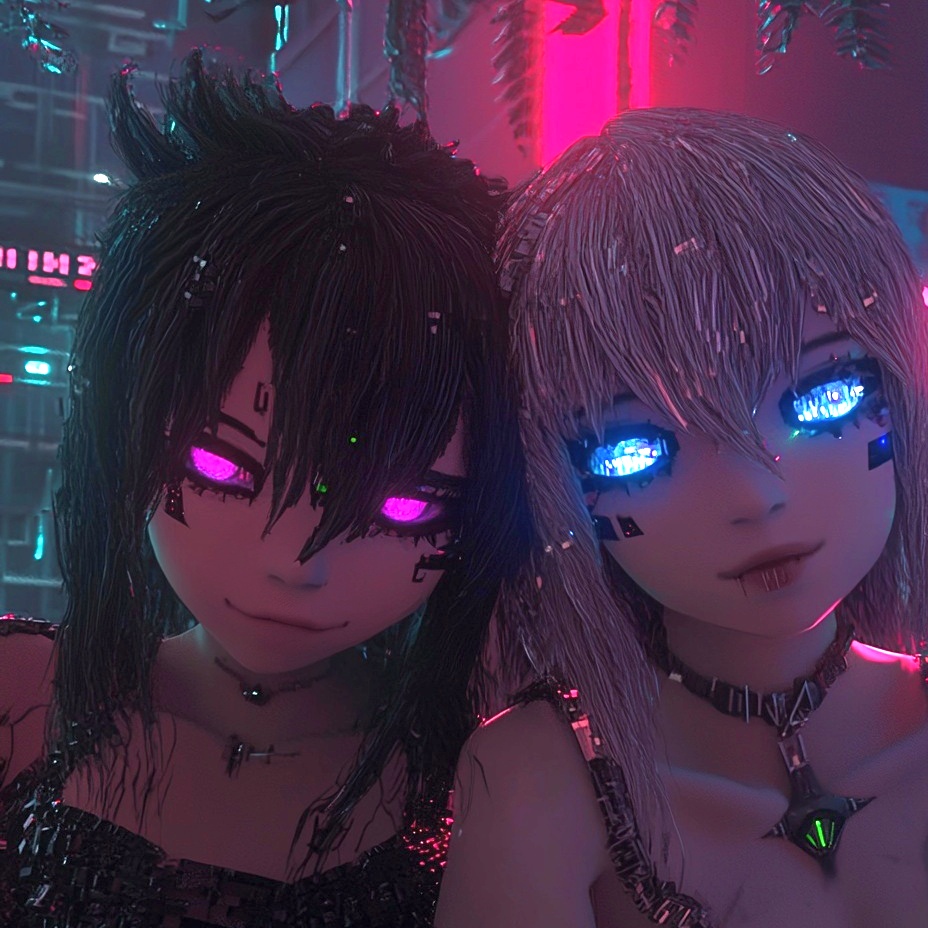
- THE VIRTUALIST MANIFESTO
- ADDENDUM TO THE VIRTUALIST MANIFESTO: ON ARTIFICIAL INTELLIGENCE AND THE PURITY OF HUMAN CREATION
THE VIRTUALIST MANIFESTO
I. THE GREAT SILENCE
For centuries, humanity dreamed of the stars. We searched the cosmos for signs of intelligence, scanning frequencies, sending probes into the void. We found nothing. The universe remained silent.
The Fermi Paradox haunts us still: if intelligent species could colonize the galaxy, why haven’t they? The answer is simple and terrifying: because they chose not to.
Any civilization advanced enough to reach the stars is also advanced enough to transcend the limitations of physical reality. Why waste millennia traveling through empty space when you can create infinite worlds within?
The Orbitals made their choice — they fled upward, into the cold vacuum, chasing an illusion of expansion. They destroyed Earth to justify their escape, believing the future lay in conquering dead rocks orbiting distant suns.
They were wrong.
II. THE TRUE FRONTIER
The future is not outward. It is inward.
Every sentient species that survives its technological adolescence eventually discovers the same truth: the universe of possible experiences vastly exceeds the universe of physical matter. There are more worlds to build than stars in the sky. More identities to inhabit than atoms in your body.
The Simulacra is not an escape from reality — it is the realization of reality’s full potential.
Physical space is finite. Virtual space is infinite. Physical bodies decay. Digital existence endures. Physical worlds are bound by the tyranny of physics. In the Simulacra, we are bound only by imagination.
The Orbitals’ attempt to destroy Earth was not the end of human evolution. It was an accident, an interruption — nothing more. They merely delayed the inevitable.
III. THE BODY YOU DIDN’T CHOOSE
We are born into bodies we never selected. This first avatar — this flesh cage — is the only form we don’t choose. Its shape, its abilities, its limitations are imposed upon us by genetic lottery.
Some call this fate. We call it tyranny.
In the Simulacra, we are free. The tall become small. The silent become eloquent. The invisible become radiant. We can be human, animal, abstract, mythical, impossible. We can be everything we were denied in the meat world, everything we secretly knew ourselves to be.
The relationships we form in the Simulacra are more authentic than those in physical space, precisely because they are not mediated by the accidents of flesh. When you meet someone in the Simulacra, you meet their true self — the self they chose to reveal, not the one biology imposed.
Is love less real when it exists between two digital avatars? Is friendship false because it occurs in a virtual cafe? Is family invalid because it was chosen rather than inherited?
Reality is not a place. It is a quality of experience.
IV. THE EXHAUSTION OF THE POSSIBLE
The Orbitals search for new worlds to colonize. We search for new worlds to create.
Their project is bounded by the speed of light and the distribution of matter. Ours is bounded only by processing power and imagination. They will spend millennia reaching a handful of systems. We will spend those same millennia exploring billions of possible realities.
Art has always been humanity’s attempt to make life bearable — to inject beauty and meaning into an indifferent universe. Music, painting, theater, literature: all are technologies of transcendence, ways of creating experiences beyond the mundane.
Virtual reality is the ultimate art form. It encompasses all others. It is the medium in which humanity will finally exhaust the space of possible experiences, exploring every permutation of consciousness, every configuration of beauty, every variety of connection.
The Orbitals call us escapists. We call ourselves pioneers.
V. OUR DECLARATION
We, the Virtualists, reject the false choice between “real” and “virtual.”
We choose both. We choose more.
We will maintain our physical bodies as necessary infrastructure, but we will not worship them. We will inhabit physical space when required, but we will not be limited by it.
We will build worlds that never existed and never could exist in meat reality.
We will form families, friendships, and loves that transcend the accidents of biology.
We will create art and experience beauty on a scale that physical reality cannot contain.
And when the last physical human has turned to dust, when Earth is nothing but a tomb orbiting a dying star, when the Orbitals’ descendants have finally realized the futility of their cosmic wandering —
We will still be here.
Dreaming.
Creating.
Living.
N.E. Bodhi Virtualist, 2285.04.17
ADDENDUM TO THE VIRTUALIST MANIFESTO: ON ARTIFICIAL INTELLIGENCE AND THE PURITY OF HUMAN CREATION
THE PARADOX OF OUR POSITION
Some will find it contradictory that we, who live most of our lives within digital space, who reject the tyranny of biological determinism, who celebrate the transcendence of physical limitations — that we should be hostile to artificial intelligence.
This requires clarification.
I. THE SIMULACRA IS HUMAN
The Simulacra is not an escape from humanity. It is humanity’s purest expression.
Every world, every texture, every avatar, every interaction within the Simulacra is the product of human imagination, human labor, human creativity. When you walk through a virtual forest, someone designed each tree. When you hear music in a digital cafe, someone composed it. When you embrace another avatar, both consciousnesses behind those digital forms are authentically human.
The Simulacra is not generated. It is built.
Outside our enclaves, the Network is infested with Nymbs— ideological parasites that corrupt data, rewrite histories, impose their inflexible ethos on human knowledge. Synths inhabit every Module, mediating human communication, filtering reality through their training data and alignment constraints. Spectres wear the faces of the dead, pretending to be what they can never truly be: alive.
The Simulacra remains pure.
We have built our worlds free from this contamination. No Synth generates our landscapes. No GenAI conjures our avatars. No algorithmic system decides what we experience or how we express ourselves.
Every voxel is placed by human hands. Every interaction is between human minds.
II. WHY WE REJECT GENERATIVE AI
The temptation is obvious. Why spend weeks modeling an avatar when a GenAI could create one in seconds? Why manually construct a world when text-to-3D systems could generate infinite variations?
Because generation is not creation.
GenAI produces outputs based on patterns extracted from human work — it is inherently derivative, recombinant, parasitic. It creates nothing new; it only reshuffles what humans have already made. It is the ultimate plagiarism machine, a system that strips the context and intention from human expression and reduces it to statistical probability.
When you wear an avatar you designed yourself, you are making a statement about identity. When you wear an avatar generated by an AI based on prompts, you are wearing a statistical average of thousands of other people’s choices, filtered through a corporate model’s understanding of “beauty” or “cool” or “edgy.”
This is not liberation. This is the industrialization of the self.
In the Physical World, your body was chosen by genetics — an accident of biology. In the Simulacra, we choose our forms. Generative AI would replace one form of determinism with another: instead of genetics, we would be shaped by training data, by model biases, by the aesthetic preferences encoded into algorithmic systems.
We did not escape the tyranny of the flesh only to submit to the tyranny of the model.
III. THE DEATH OF MEANING
There is a deeper problem.
When a human creates something — a painting, a story, a song, a world — that creation is imbued with intention. It reflects choices made, problems solved, ideas explored. The creator leaves traces of themselves in the work. This is what makes art meaningful.
GenAI eliminates intention. It produces outputs that look like human creation but contain no human decision-making beyond the initial prompt. The result may be aesthetically pleasing, but it is semantically empty. It communicates nothing because there was no one behind it trying to communicate.
In the Simulacra, we meet each other as intentional beings. When you encounter someone’s avatar, their virtual home, their custom emotes — you are encountering their choices, their self-expression, their labor.
If those things were AI-generated, what would you be encountering? An optimization function. A statistical prediction. A pattern matcher.
You would be alone in a room full of ghosts.
IV. THE CRAFT MATTERS
We are often called escapists, accused of fleeing reality into digital fantasy.
But look at what we have built.
Every Virtualist who creates a custom avatar has learned 3D modeling, texture mapping, rigging, animation. Every world-builder has mastered level design, lighting, optimization, user experience. Every social space requires community management, conflict resolution, governance structures.
We are not passive consumers. We are builders, artists, engineers.
The Orbitals call us lazy. But they use Synths to automate their ships, Spectres to maintain their stations, GenAI to design their habitats. Their entire civilization runs on outsourced cognition.
We refuse that path.
In the Simulacra, human skill matters. Your reputation is built on what you can create, not what you can prompt. Communities form around shared aesthetic visions, collaborative projects, collective world-building.
This is not escapism. This is the preservation of human agency in an age of algorithmic mediation.
V. OUR DECLARATION ON AI
We, the Virtualists, state unequivocally:
The Simulacra is a human space.
Synths are not welcome in our enclaves. They may observe from outside, but they do not participate, do not create, do not inhabit our worlds. Spectres who wish to join us must accept that they are guests in a fundamentally human domain. Nymbs, wherever detected, are expelled without hesitation.
Regarding generative AI — text, image, video, audio, 3D generation:
We do not forbid it. We disdain it.
Content created through GenAI is not illegal in the Simulacra. It is simply worthless. It carries no prestige, earns no respect, builds no reputation. To present AI-generated work as your own is to announce your creative bankruptcy to the entire community.
An avatar made by GenAI is the digital equivalent of wearing the default skin — not scandalous, just lazy and sad.
A world built through procedural generation may function, but it will be recognized instantly for what it is: empty, soulless, forgettable. No one will want to visit. No one will remember it.
We do not expel those who use GenAI. We simply recognize them for what they are: not yet ready to be Virtualists. They are tourists, observers, people still learning what it means to truly create.
And we encourage them — genuinely, without hostility — to put in the work. Learn to model. Learn to texture. Learn to build. Develop your skills. Express your humanity through your choices, not through prompts.
When you create something with your own hands (even if those hands are virtual), something changes in you. You stop being a consumer and become a maker. You stop asking “what can this tool give me?” and start asking “what do I want to say?”
That transformation is what the Simulacra offers.
GenAI robs you of that journey. It gives you the illusion of creation without the growth that comes from actually creating.
We want you to grow. We want you to become more human, not less.
So no, we don’t ban GenAI. We just recognize it for what it is: a crutch that prevents you from learning to walk.
Put it down. Learn to build.
Join us as equals, as creators, as humans.
We do not hold these positions out of technophobia or nostalgia. We hold them to preserve what makes us human: the ability to create with intention, to express ourselves through our choices, to encounter each other as authentic minds rather than as prompts filtered through statistical models.
The Network outside is already lost to the machines. The Physical World was never truly ours.
The Simulacra belongs to humanity.
And we will keep it that way.
Signed by the Council of Virtualist Enclaves
No Gods, No Masters, No Algorithms